Hoping to Learn & Learning to Hope

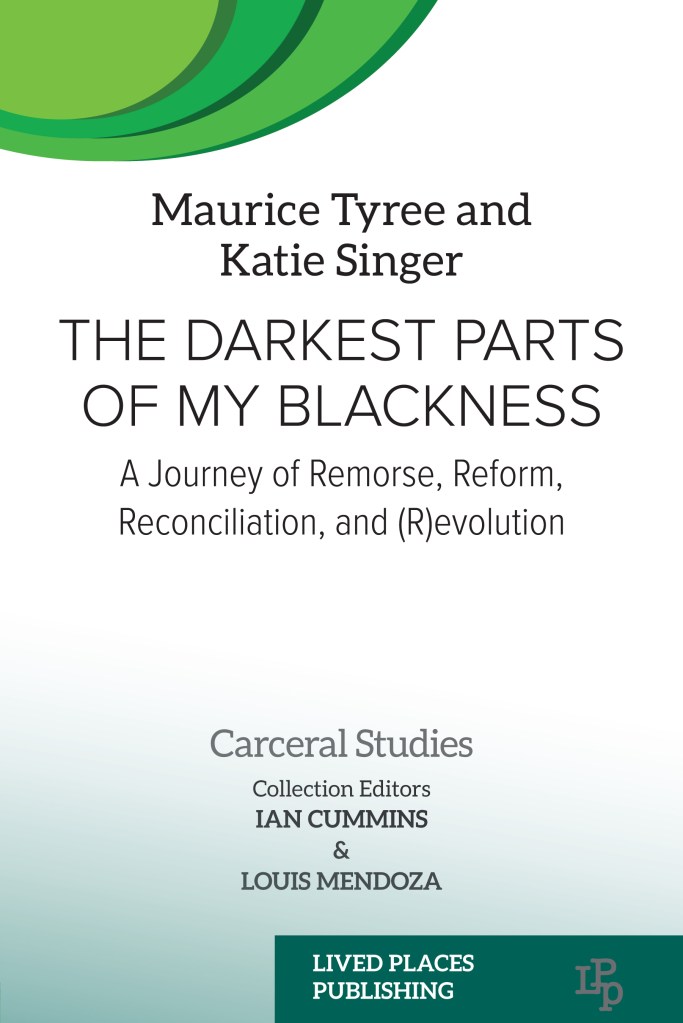
“OVERHAULING THE AMERICAN PRISON INDUSTRY: A View From 20 Years of Incarceration” is the name of the seminar that my co-author Maurice Tyree and I appeared on this morning. Hosted by our publisher, Lived Places Publishing, it was an opportunity for people to learn about our book, hear Maurice’s thinking, and simply understand why we wrote the damn thing, The Darkest Parts of My Blackness: A Journey of Remorse, Reform, Reconciliation, and (R)evolution.

The why? Essentially, to effect change. To humanize the people held in cages in this country who are being sold a bill of goods that they are part of a rehabilitative system that is more often than not a site of cruelty and dehumanization.

Injustice anywhere is a threat to justice everywhere.

– Rev. Dr. Martin Luther King, Jr.

This was how Maurice led off, answering as to why people should care about what happens inside American prisons, why folks should wonder how roughly 1.8 million of their fellow citizens might be doing in there. I have had people remind me that some folks don’t believe criminals deserve any kind of “special” treatment, that they are paying dues for their wrongdoing and thus deserve the punishment they get. Yes, we know this belief system exists. In fact, good old “liberal” Blue-state California just voted down Proposition 6, which would have banned involuntary servitude in prisons. The 13th amendment is alive and well:

Neither slavery nor involuntary servitude, except as a punishment for crime

See, we never actually rid our country of slavery. It’s right there in the ironically entitled Bill of Rights. If you haven’t already, please watch Ava DuVernay’s film 13th. It explains a lot, in a most powerful and stunning  fashion.

And guess what, you know who the majority of those involuntary servants are, Black people. You know why? It’s not because Black people are somehow more prone to crime, it’s simply that they are more prone to be exploited by the systems of racism in this country that place them in vulnerable positions which tend to be proximate to crime and criminal behavior. And of course, there is the fact that not everyone in prison is guilty. See the Innocence Project, as just one example of this fact. This is an injustice to so many. And, as Maurice points out, even if you don’t care what happens to them inside, they are eventually going to come out — and to a neighborhood near you. The previously incarcerated are present right now at the places you shop, work, and study. Wouldn’t you prefer to share those spaces with folks who have come out rehabilitated, instead of beaten down? Transformed, instead of hardened by anger? Hopeful instead of nihilistic?

Hope is something Maurice talks about a lot. Someone in the chat, during our seminar, asked how a prisoner could find hope in such a dark place. His answer: hope. Hope breeds hope. He calls it a revolution within that ultimately creates a revolutionary without. That is what he did with himself, but not everyone can. The point is that one should not have to be the smartest, most resilient human alive just to come out of prison with a chance at a redemptive life. Because most of us aren’t all that. That’s one reason he wanted this book to get published:

In the January 2012 letter to [my sister] Marquetta, I mentioned a “book writing idea.” What you are reading is basically the result of that idea. I wanted to “seek some form of liberation within the reader’s mentality” [as written in the letter] because I knew that people’s minds would need to be freed from a lot of preconceived notions. I wanted to encourage people to work hard to understand other people, people they didn’t know but maybe still had opinions about (59).

Education is a large theme in the book. How it’s denied, how it’s defined, how one snatches it up where one can. In our book, there are essentially three voices: one comes in Maurice’s letters that he wrote to family, friends, and associates while incarcerated; the second voice appears in his reflections on these letters as he re-reads and reconsiders them at the present; and the third voice is mine, providing historical and social context – and commentary – to all of the above. The Introduction begins with Maurice’s Compassionate Release Letter. It was submitted at the height of the COVID pandemic, when the prisons were veritable breeding grounds for infection. Over 6,000 incarcerated people died in the first year of the pandemic alone. Maurice had major health issues, already undergoing heart bypass surgery in prison.

In his letter to the presiding judge, Maurice addresses concerns expressed previously by that judge about his educational accomplishments (or lack thereof) while incarcerated. I provide this context:

Education is a complicated term, one that carries a very singular meaning for many people. Mr. Tyree, referencing Ta-Nehisi Coates’ book, Between the World and Me, explains that, like Coates, he was never much of a classroom person, even as he had definitely become a book person. Coates writes, “The pursuit of knowing was freedom to me, the right to declare your own curiosities and follow them through all manner of books. I was made for the library, not the classroom. The classroom was a jail of other people’s interests(17).

Later he writes about how he sought out his own education:

I grew so much once I started reading about the ideas and lives of different people, especially the writing of Black thinkers and activists that I never heard of in school. They were the door to my mental liberation and I wanted others to take that journey, too (60).

And finally, he sums up education like this:

Everything we do in life can be considered school. School is school, but so is growing up in a rough neighborhood, selling drugs, and going to prison. I have chosen to learn from all my schooling, and I keep on learning now that I’m out. What I learn I like to pass on to others, maybe save them a couple years or so. And my brothers do the same for me. I have learned all manner of things in these life classrooms. It’s all about exchanging information and ideas, that’s how we grow and learn. That’s how we create community. That’s human connection (212).

I had two books come out this summer. And as distinct as they might seem at first glance, they are really quite the same. Alien Soil: Oral Histories of Great Migration Newark foregrounds stories of African Americans who came to Newark during the Great Migration. In their words, through oral history interviews, they describe an event, place, and time that is often left to outsiders to explain. Same goes with this book with Maurice. There is much scholarship, journalism, and political punditry surrounding America’s prison industrial complex. But this book provides explanation from one with lived experience. Fortunately, this practice is becoming a bit more common regarding the prison system, as newsletters, podcasts and journals surface, ringing with the voices of the incarcerated, as well as of those who have found their freedom — in one way or another.

I understand my assignment, as they say. It is to provide historical framework and social context for the narratives of Black Americans whose stories continue to be buried and just plain erased. Perhaps the reader will take on the assignment of listening to some of those voices. This seems all the more urgent in light of the recent changing of the guard in our American political system.

World on the Move

WORLD ON THE MOVE: 250,000 YEARS OF HUMAN MIGRATION is a traveling exhibition made possible through the partnership of the American Anthropological Association and the Smithsonian Center for Folklife and Cultural Heritage. So believe me when I say I was thrilled when the principal librarian of Piscataway Public Library, Joy Robinson, contacted me to speak about my new book, Alien Soil: Oral Histories of Great Migration Newarkas part of this project. The Great Migration was being recognized as a global human migration movement, a grand contribution to history, and I couldn’t have been happier.

The audience that night, at the very lovely Kennedy Library, was made up of a diverse array of people. There were members of the African American Seniors Club; friends and colleagues of mine surprised me; and even some of Joy’s family was there. Within this community, I got to share some of the stories from my book, and honor a history that now more than ever, as they, say, is at risk of erasure.

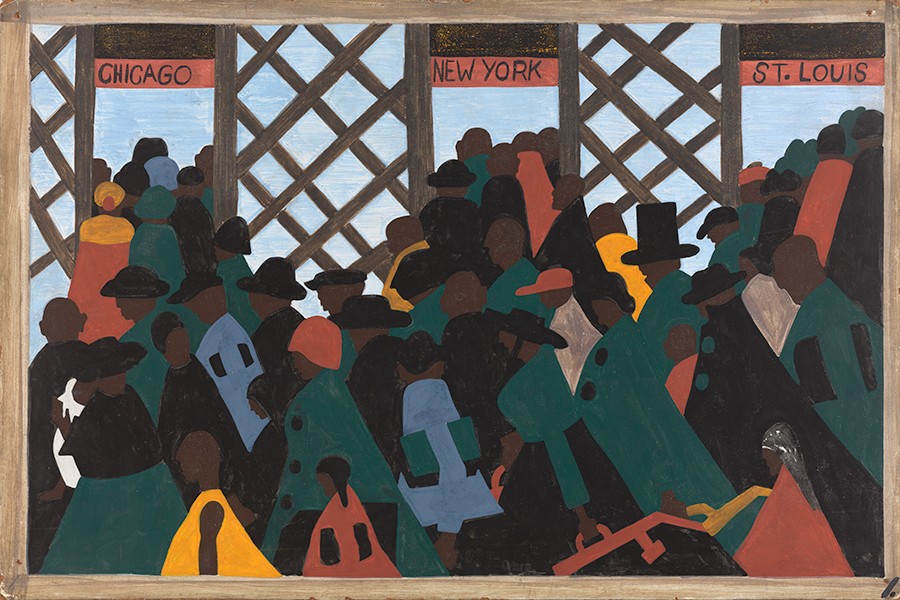
I began my talk with a brief overview of the Great Migration, because you might be surprised at how many people don’t know what it is, unless they have family who participated. I spoke of Jacob Lawrence’s fabulous Migration Series, suggesting that there were probably folks in the audience like Lawrence, who had heard similar Great Migration stories in their day. Indeed, I learned afterwards, there were.

I explained that there were many ways in to understanding the Great Migration, like with Lawrence’s paintings. There is, for example, also historian Giles Wright’s book, Afro Americans in New Jersey. And then of course, there are oral histories and why I even wrote this book. Because I’m not telling anybody’s story – the narrators in these interviews are telling their stories. I am merely the publicist and contextualizer. (Spell-check says that’s not a word, but being an academic AND a creative writer I took license long ago to make up words whenever I wanted to).

I showed the attendees that night the Krueger-Scott African American Oral History collection’s website so that they could go on and listen to more of the interviews that I referenced in my talk. As can you, dear reader!

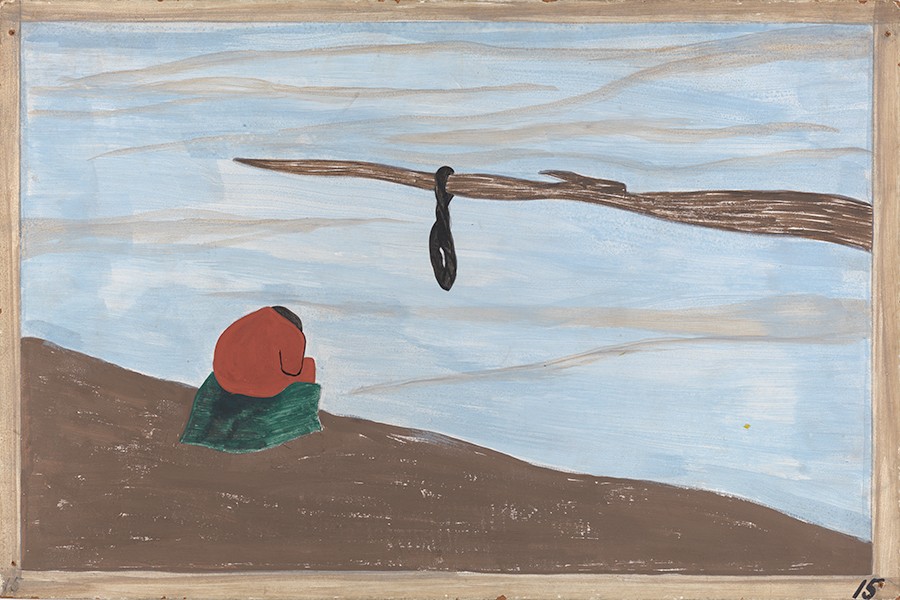
There are numerous questions asked about this time period. For example, Why did African Americans leave the South during this time. What made ultimately six million people leave their homes requires close to six million answers, but one big one is to save lives. As Lawrence captions Panel 15, “There were lynchings…after a lynching the migration quickened.”

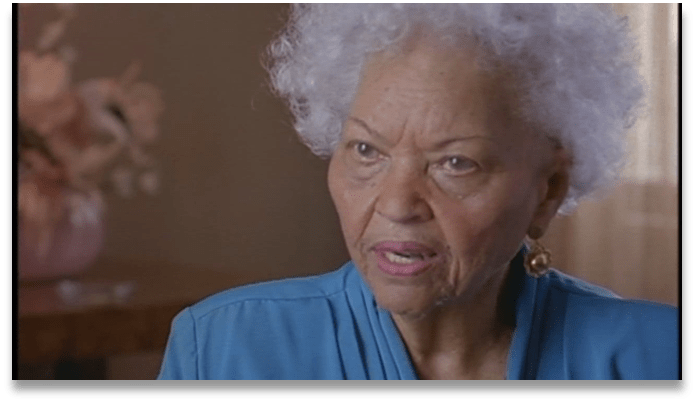
Willa Rawlins said in her Krueger-Scott interview:

My father had preceded us to Newark…My uncles felt it was better for my father to be up North because he had a hot temper and they didn’t want to see him hanging from a tree down there. Period.

Of course it wasn’t like the North provided some fully safe space for African Americans either. All things are relative in racism. In fact, the wonderful NJ Social Justice Remembrance Coalition has been working to memorialize spaces where Black Americans have been lynched in New Jersey. They recently received funding to create a marker for the spot where Samuel Johnson was lynched in Eatontown. And now they are working with The National Memorial for Peace and Justice in Montgomery, Alabama to have Mr. Johnson’s name added to the museum’s exhibit that remembers the scourge of lynching in our country. I visited this site in the summer of 2023. It is incredible, and not an easy experience. But if everyone in this country went there, somehow someway, we might not have just elected ourselves a racist-plus president. But I digress.

Another reason that Black Southerners were leaving their homes was that they simply wanted to give their children the chances in life they never had. This is a parental instinct as old as parenting. A lot of the Krueger-Scott narrators were kids when they came to Newark. The above-quoted Willa Rawlins was 4 years old when she arrived; and John B. Ross came at age 5, in 1924, from Georgia; and there was Ethel Richards who was 9 when she arrived in Newark, in 1927. Most of these narrators, at the time of their interviews, were in their 70s and 80s, yet they often had vivid memories of coming to Newark as children. This is a human trait, remembering childhood moments well when our surroundings have shifted drastically.

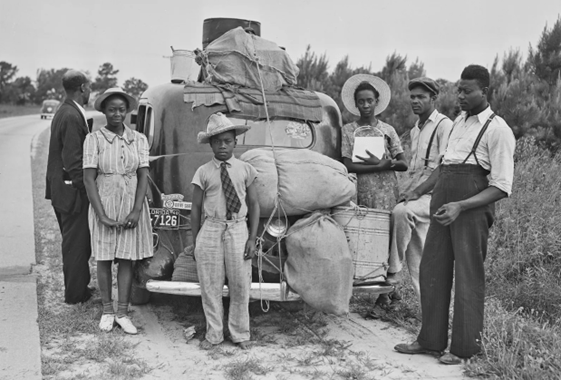
Another question that often arises is, How did the African Americans travel to get to their new homes? Again, there are many answers to the question. Not everyone piled their luggage on top of a car, like this iconic photo that seems to show up every time the term Great Migration appears on the internet.

Unnamed members of an African American family preparing to leave North Carolina for New Jersey in 1940, during the Great Migration. https://www.britannica.com/event/Great-Migration#/media/1/973069/261415

One of the most popular modes of transit was the train. There are so many stories of that train ride in my book, and such different memories of the experience. One interviewee actually remembered sitting next to Jesse Owens on her trip and you can hear the excitement in her voice as she recalls this experience, all those decades later.

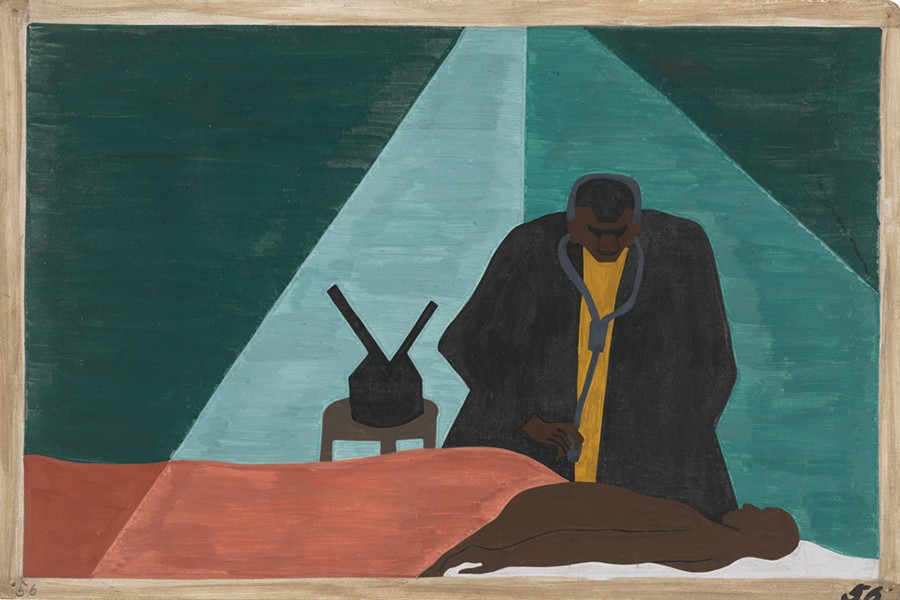
My commitment to oral history has to do with my mission to foreground the voices of people with lived historical experiences that so often are left untold. One perc of an oral history collection is that it reminds us that no one group is a monolith. This is an especially valuable reminder when it comes to African Americans and their history. In fact, one of the myths surrounding the Great Migration is that everyone who left the South was poor. In actuality, large numbers of educated, professional people were a part of this migration – and why cities like Newark – and Los Angeles — have the industries and institutions that they do. The Krueger-Scott oral histories alone feature teachers, doctors, politicians, clergy, radio personalities, musicians, activists, journalists, poets, psychologists, and law enforcement officers, amongst others. As Lawrence captions Panel #56, “The African American professionals were forced to follow their clients in order to make a living.”

At the library talk, I showed the audience how my book was organized – because it’s apparently unusual for a history book to focus on themes rather than timelines and famous people. I also shared the story of the Krueger-Scott Mansion – where the interviews were supposed to be housed in a Black cultural center. And of course, there was much more said that night, but suffice it to say the evening was a pleasure for numerous reasons. Joy raffled off my books and I signed them; others brought their books for me to personalize; there were even nice snacks. But most importantly to me, I had people comment that I was doing the right thing, doing right by these stories and their narrators. We all know what it means to have someone say they understand your work and see it as important. I drove home that night, in my son’s car that seems to beep at me incessantly, thinking that this book tour might not have been such a bad idea after all. So many of us really do want to keep on learning our history, and for that I am truly grateful.

Not On Her Watch

BLACK WOMEN ACTIVISTS still don’t get enough play in our country’s historiography. But slowly their stories are being foregrounded, such as in my colleague Hettie Williams’ new book, The Georgia of the North: Black Women and the Civil Rights Movement in New Jersey.

My recent book, Alien Soil: Oral Histories of Great Migration Newark also foregrounds the stories of these activists, in their own words. In sharing these stories, I argue for an expanded definition of the word, activism, itself. My hope is that this in turn will provide increased light on the subject of “everyday” people doing the good work, making the good trouble.

Today’s blog is dedicated to just such a woman, a participant in the Krueger-Scott African-American Oral History Project who is featured in my book. Allow me to introduce one of my favorite people, Louise Epperson.

Louise Epperson was born in Waynesboro, Georgia in 1908 and moved to Newark, New Jersey in 1932. She worked as a domestic, one of the few jobs available at the time for Black women. Epperson was living what she called “a quiet life” at her aunt’s house on Orange Street, and later on down the line saved up enough money to purchase a modest home of her own on 12th Avenue.

She ultimately secured a position as an aide at the Willowbrook State School on Staten Island, a facility for the mentally disabled. Once hired, she started eyeing the occupational therapist position but was told that a Black woman would never be hired for the relatively prestigious job. Yet she persisted.

And I bidded on that job and I got the high score and I received it and I was the first Black to work on that. I was the first Black to work in occupational therapy. Everybody say when I saw that on the board, “Oh Mrs. Epperson they don’t hire no Blacks.” And I say, “You don’t know what they’ll hire until you try.”

Her plan was to retire from Willowbrook in 1967, going back to that quiet life of her early years. That was until a newspaper headline changed those plans. On January 1, 1967 she read in her morning paper that the New Jersey College of Medicine and Dentistry (NJCMD) was planning to expand right into her own backyard:

It said that this school was gonna move into Newark regardless of what anyone said, and they were coming from Jersey City because they was runnin’ Jersey City broke. So they were going to come into Newark, and first thing they were gonna do was to blight all the land that they wanted. And they wanted something like over 300 acres of land at that time. And they had already blighted part of 12th Avenue where I lived, and one side of the street was blighted. And they called that urban renewal. Well I say it looks more like Negro Removal than urban renewal, you know.

This was just one more land grab that was happening to urban neighborhoods across the country at the time. The official name of this act, “eminent domain.” But Epperson wasn’t having it. Starting out with meetings at her kitchen table, attended by just a few neighbors, Epperson ultimately founded the Committee Against Negro and Puerto Rican Removal, a group that would become a cornerstone of Newark’s political history. It is probably clear by now that this is not the story of some unwitting woman caught up by the winds of a turbulent historical moment — a trope regularly perpetuated upon women of color, especially. Rather, this is a tale of yet another longtime feminist activist of color, a household name in her community, who is scarcely acknowledged in the history books.

People had already started moving out of Louise Epperson’s 12th Avenue neighborhood. Some did so in order to remain one step ahead of what was presented by the media and municipality as a fait accompli. It was in the middle of all this that the July 1967 rebellion erupted:

When I started the fight with the med school, I tried to get everybody in the city and the state and the county and the federal government to help me. I went to everybody. Everybody gave me the runaround. To go to this one, and go to that one . . .  I had contacted everyone that I possibly could in higher, upper powers. Then the riots broke out. Everybody that I tried to contact before this happened, everyone, everyone, including the Governor, including the president from the College, Dr. Cadmus, including Chancellor Dungan, Paul Ylvisaker, they all came to my door to see what they could do to sit down for a community meeting in the City of Newark.

The Governor ended up sending two buses to Newark, inviting Louise Epperson and her comrades to ride down to Trenton and talk with him about the development plan. Other leaders simply asked Louise Epperson to “call them off.”

I said, “I can’t call them off, I didn’t call them on… You know, you did that not me. You called the State Troopers in here. You barbed-wired our city off where nobody could come in or go out. I didn’t do those things. You did it. And people are dead, and I’m feeling very sad and very low because it could have been avoided if you’d have only took time to meet with me. I was willing to come any place to meet with you so that we could settle this thing before it got this far, with all the dead people and the hospital.”

Louise Epperson, along with a number of other groups and individuals, organized, mobilized, and battled against political and administrative powers — from municipal to federal — for many years. The outcome of this long and drawn-out fight was the Newark Agreements. This plan included a decrease in the hospital’s land allocation which would have initially displaced approximately 20,000 Black and Puerto Rican residents in the Central Ward. There was a moderate increase in financial subsidy for those who would be displaced by the medical school development as well. Eventually the hospital was built on 58 acres, much less than the initially proposed 300 acres. In addition, 60 acres in nearby neighborhoods were to be “relinquished,” designated expressly for new and affordable housing.

In the end, of course, there were still numerous families who suffered under yet another relocation, but because of the work of Mrs. Epperson and other local activists, more people received better compensation than that which was initially promised. In addition, extra beds were designated at the hospital specifically for use by the local community, and gradually the medical school delivered on supplying much needed medical services — and a handful of jobs — to the residents of Newark.

Meanwhile, Louise Epperson received a job offer from the very hospital against which she had organized. The community encouraged her to take it, she said. This way she would be sure that the hospital kept its promises.

I went home, and I thought it over and I prayed on it. I decided to come to work for the College of Medicine and Dentistry — providing that I had an open-door policy: I could go direct to the President anytime I wanted.

Indeed, she was given full access to Dr. Cadmus and was seen marching into his office on a regular basis with issues brought to her by the community. Mrs. Epperson continued to advocate for her city until her retirement at age 87, and even thereafter. She passed away in 2002, at the age of 96.

Just one more example of why I say, “let’s keep learning our history!”

Book Me

Photo by Pixabay on Pexels.com

BOOKCLUB MAVENS! (A gender-neutral term, I’ll have you know). This week I am here to suggest that my book would be superperfect for your next gathering. I’ve done some major research in my day when it comes to book clubs, let me tell you. And it occurs to me that my new book, Alien Soil: Oral Histories of Great Migration Newark would make for a great book club book.

After some thorough Googling (!) I have found that there are certain factors involved that make for an excellent book club book. I will now share a few of those factors and provide support as to why my book satisfies these requirements. (Can you tell I’m in the midst of teaching composition right now)?!

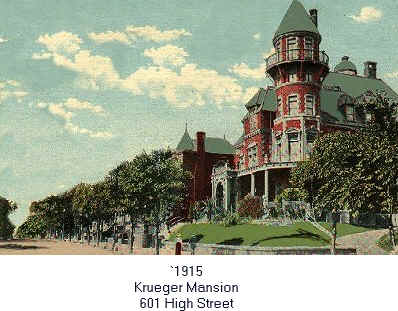
Okay, for one thing the book apparently needs to have enough substance for robust discussion. I can assure you that my book is substantive and prime for discussion. You can talk church, baseball, music, politics, labor issues, art, fire, race, cities, historic preservation and rebellions. Something for everybody! For example, take these excerpts from Chapter One which details the story of why the esteemed Krueger-Scott Mansion couldn’t ever quite get turned into the Black Cultural Center so many wanted it to be.

The Mansion was the proverbial elephant described very differently by each individual in a group of blind men. The edifice symbolized an outdated Newark for some, a point away from which the city needed to move. Others saw the house as a reflection of the long history of the people who came to Newark and who were in large part responsible for what it had become – a modern city of culture, trade, and learning. The Mansion’s beauty – and value – were in the eye of the beholder. Lou Danzig, Newark Housing Authority (NHA) Director, declared it a “monstrosity” in 1966 at one particularly contentious public hearing. At the same meeting J. Stewart Johnson, curator for the Newark Museum and president of the Victorian Society of America, argued for the protection of the Mansion, out of respect for the city’s early history. “…We are destroying the 19th century here as fast as we possibly can,” he warned.

In 1979 the Krueger-Scott Mansion was still in fair condition, although it had suffered a fire on the third floor which “damaged the structure’s heating system” and “destroyed the dome’s crystal skylight.” The following year the City of Newark made its first investment in the Mansion’s preservation, approving a $50,000 grant for “emergency repairs.”  The Mansion had finally made its way into the conversation that was already surrounding several local historic preservation efforts. “Mrs. Scott is to be admired for holding onto the mansion for so long…” said Margaret Mandhart of the Newark Preservation and Landmarks Committee in 1981. The hope was that Scott’s hard work would not be in vain.

Louise Scott in her mansion

The physical realities of what it would take to reconstruct and repair the Mansion were becoming ever clearer, although of course not everyone agreed just what those realities were. A July 1991 report by Glenn Boornazian Architectural Conservators stated that removing the stucco surface (that was probably applied by the Scottish Rite Masons) in a non-destructive manner from the brick was “unfeasible if not impossible.” (Handwritten next to that section on the document is the word, “shit,” circled and with an exclamation mark).

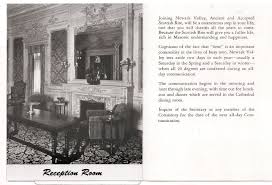
Scottish Rite Freemasons brochue

Catherine Lenix-Hooker [executive director of the project] has asserted that the Krueger-Scott African-American Cultural Center project was not a failure, that they “went the distance” with what they had. A dwindling tax base, concerns over struggling schools, and corruption in government are just some of the reasons she gave for the inability to finish what was started. Mayor [Sharpe]James has insisted that cost came in as the number one issue surrounding the Mansion project, followed closely by just who would control what once it was finally completed. “Cost and control ruled the day!!!” exclaimed James. The simple conclusion is that economics vanquished this historic preservation effort. When asked, both Lenix-Hooker and James were adamant that race played no part in the Mansion’s demise. But as late historian Clement A. Price said many times, including in his documentary, The Once and Future Newark, “Race matters in America. Race matters in Newark.” Race matters in the story of the Krueger-Scott project.

The Mansion, circa 2011
Photo by Samantha Boardman

How’s that for a soap opera starring a mansion?! The good news is that the property has finally been restored, but alas, not as a Black Cultural Center.

Second on the book-club-factor-list is that the book has to be widely available. Well, I think we all know by now how widely available this puppy is. (See its link in the first paragraph). Of course, I prefer you order it through the publisher – as opposed to that other place that starts with an A. (See just the latest in a list of labor exploitations this company perpetrates upon its workers). But do you. The book can also be purchased from me, if you live nearby OR if you attend one of my upcoming events. You could even get it personalized that way!

Another suggestion is that book club books not be too long. Well, mine is a tidy 170 pages – with pictures, too! Plus, don’t be freaked out that it’s from an academic press. If you’re reading this now then know I write in pretty plain English — no jargon here. In fact I was literally told in grad school that I didn’t write like a historian and, well, that felt like a good thing. Who wants to write like a something? I’m a storyteller and everyone loves stories!

And get this, I would come to your meeting (as long as wine and cheese are available, of course). I’ll even Zoom in if you’re far away from me — and then have my own wine and cheese. Plus I can provide some discussion questions for you all if you’d like. It’d be fun! I’ve been in book clubs where the author comes and it just changes everything. Of course you probably won’t want to be too snarky when they’re there, so easy on the Chardonnay if that’s something that happens to you. (Talking to myself here)!

So yeah, read my book; review it on Goodreads (and other sites); then suggest it to your book club. Let’s keep learning our history – but not be bored in the process. Thanks!

Southern Ways

“From every southern town migrants left by the hundreds to travel north.”
Panel 3: The Migration Series, Jacob Lawrence.

“SOUTHERN TOWN.” The term can evoke images of racism and violence. And this was the case quite often, through the 20th century – and of course still occurring even today. But, as oral histories are so wonderful in reminding us, nothing and no one is all one thing. And the interviews from the Krueger-Scott African-American Oral History Project that appear in my book also remind us that not every Black migrant left an agricultural life – another image we often see through depictions of this historical event. After all, some folks came from the cities; they abandoned spaces both rural and urban, as they headed north, east, and west. And while this Migration may have started out “by the hundreds,” in the end approximately six million humans uprooted themselves, and their loved ones, from their homes to escape whatever it was they no longer could abide by. Hence a Great Migration. Below I am going to share some bits of discussion around this leaving. And, as you know by now, you can always order my book to read so very many more of these kinds of stories.

Louise Scott, who left Florence (probably), South Carolina in 1936, became a millionaire beauty culturist in Newark, NJ. She built an empire, running many businesses out of the Krueger-Scott Mansion on High Street (now MLK Blvd.). A foundation has been created to honor and continue her legacy, the Newark Scott Civic and Cultural Foundation. And many of the narrators in my book speak of Madam Scott and the Mansion; she was an integral part of the Black Newark community for decades.

Now, the City of Florence was chartered in 1871 by the Reconstruction government and ultimately named after a railroad magnate’s daughter. Florence was what many might imagine as a place African Americans would leave, if they could, for “a better life.” Sharecropping, for example, was a major occupation for many Black citizens, growing mostly rice and tobacco. And if you know anything about the system of sharecropping, then you know it was not really set up to benefit those who worked within it.

Attorney Eugene Thompson spoke about his mother working as a domestic while living in Norfolk, Virginia. But she moved to Newark, met her husband, and gave birth to her son. Eugene. Mr. Thompson’s father, a journalist, was born in Memphis, Tennessee, and just “followed the Mississippi River,” finally ending up in Newark, according to Thompson.

In 1923, Norfolk’s city limits were expanded as it annexed several cities, while also adding a naval base and miles of beach property. The Norfolk Naval Base grew rapidly because of World War I, and this created a housing shortage in the area. I would imagine that then, like now, those most affected by the housing shortage were the poor and working class. And at that time, that would mean a preponderance of African Americans.

Memphis, Tennessee is well known today for many things, including its music scene. I visited the city last summer on a civil rights tour. It was a hard place to be Black person for a very long time, even though many famous African Americans lived their lives in Memphis — including W.C. Handy and Ida B. Wells-Barnett. Cotton was still “king” there, even in the early 20th century – and racist violence was rampant, including lynchings.

Matthew Little, retired factory worker for General Motors, was born in Starr, South Carolina. In his interview, he was explaining differences between northerners and southerners in terms of attire:

“Oh, in the South you wore what they call overalls, with suspenders, and here they even wore coveralls, which covered the whole body, you know. And in the South, especially in the country, they wash their shirts and overalls and starch ‘em and wear ‘em on Sunday. Instead of dressing in suits and ties.”

Starr, South Carolina was founded in the late 1830s under the name Twiggs. It was renamed Starr in honor of Captain W.W. Starr, another railroad official. Like many southern cities it was an agricultural hub, with early 20th-century “stately” homes — as the publicity material called them — including the Evergreen Plantation. (You can have your wedding there, if you’d like). More than 400 individuals were enslaved at Evergreen Plantation over the course of 150 years. That’s a tough culture to break, and probably a tough place to be an African American, even decades later.

Mary Roberts, a retired Newark Public Schools teacher and one-time district leader of the South Ward, was also thinking of fashion in her interview. Her memories took her back to her childhood in Greensboro, North Carolina.

“My mother washed the little white girls’ dresses, and I would just admire them, they were so pretty. I think that’s why I have a lot of clothes now. Because I always said ‘One day I’m going to have those pretty dresses.’”

Sometimes it’s necessary to read between the lines when researching the history of American cities. For example, one piece of material states that between, “1902 and 1905, [Greensboro] was the largest cotton mill in the south and produced more denim than any other mill in the world. In the northeast part of the city, the Cones built hundreds of homes for their workers in villages surrounding their mills.” Consider who worked in these “mills” and what the housing was like. In my own book, a terrifying memory of cotton mill housing is recounted by one of the interviewees. And well, fast forward some decades to Greensboro’s famous “sit-ins” of the civil rights movement. Clearly, things had yet to improve there, as far as many African Americans were concerned.

Pauline Faison Mathis was born in 1932 in Clinton, North Carolina. Speaking of fashion, Mathis tried to get a job at the famous Bamberger’s department store in Newark, sometime around the early 1950s. But she was told that she “wouldn’t like it” because she was so educated. “That was the word going then, ‘You have too much education, you wouldn’t be too happy here,’” explained Mathis.

I came upon several history publications about Clinton that literally didn’t mention African Americans or Black people. This is how our history still gets told, as if they were never there. As if Pauline Faison Mathis’ family didn’t have a life in Clinton at one time. A particular name comes up regularly in searching the African-American history search of the city: Charles Clinton Spaulding. He was apparently known as “Mr. Negro Business” and established the famous Black insurance company, North Carolina Mutual. Oh, and in 2018 numerous unmarked graves of enslaved people were discovered in the town. So there’s that.

As Jacob Lawrence tells us, African-American migrants were leaving southern towns. Florence, Norfolk, Memphis… Starr, Greensboro, Clinton… This departure was done in such a manner that a name had to ultimately be provided for the situation: the Great Migration. It changed our country; African Americans transformed the United States. We need to understand how – and why. And so, until next time, let’s keep learning our history!

War, What is it Good For?


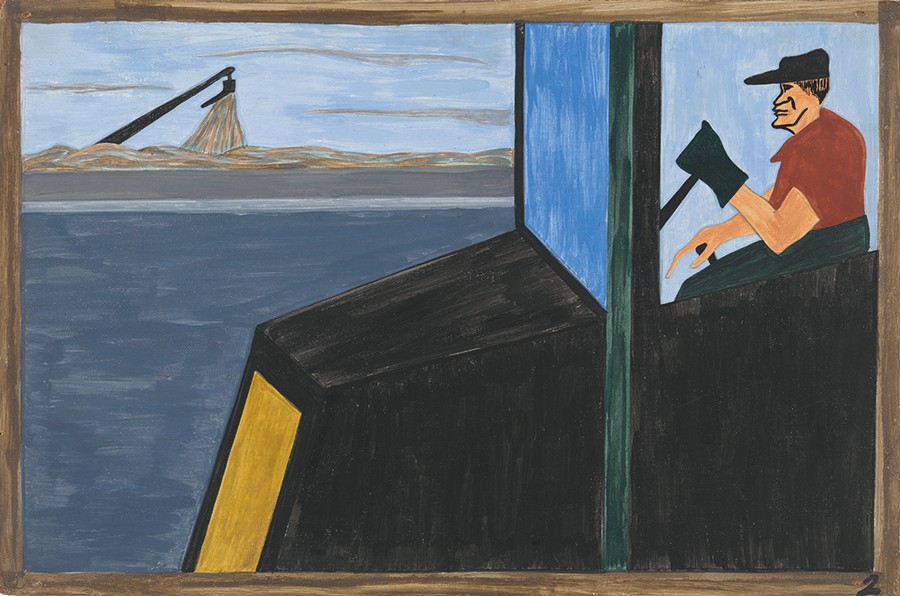
“The war had caused a labor shortage in northern industry. Citizens of foreign countries were returning to their native lands.”
Panel 2: The Migration Series, Jacob Lawrence.

WAR HAS ALWAYS BEEN GOOD FOR OUR ECONOMY. (And politicians know it, by the way). When WWI began — and again in WWII — some immigrants went back to their countries of origin to fight in those armies. This departure greatly affected urban centers like Newark, as they had been the sites of so much early European migration. The industrial revolution that this country was undergoing at the time is an era of major transformation, especially in the cities.

Newark, New Jersey was a major hub of military supply manufacturing and shipping during both wars. In fact Newark was held up as an early example of modern industry such that an exposition was held in the city in 1872, with President Ulysses S. Grant in attendance.

Urban America looks like it does now, for better and worse, in large part due to this revolution and its aftermath. And if cities are something you want to know more about, then you can always order my book and read about Newark as a microcosm of urban America!

So, at the same time that some immigrants are reverse-migrating, scores of American men are also going off to war. Most of these enlistees are white men who had been working decent jobs for a decent paycheck, in factories and other industrial locations. While Black men also enlisted, there were fewer opportunities for them as soldiers; most branches of the military were still segregated by race – or they simply barred Black men altogether. In addition, the assignments that Black soldiers did receive were most often at the bottom of the hierarchical ladder: kitchen work, menial tasks around dangerous weapons, etc. These, therefore, paid far less than other assignments.

Circumstances did not change all that much, even as WWII was declared. In fact, just one story illustrates the ways in which Black soldiers were treated during the second World War. It happened at the Port Chicago Naval Magazine, here in California. Basically, a large group of Black soldiers were forced to handle munitions they had no training for. Pushed by their superiors to expedite their work, a terrible explosion occurred, killing hundreds of people. 256 of those Black soldiers were court marshaled while most of the white men involved were simply given leave. However, just this year, these men were exonerated – of course posthumously, as is often the case with reparations for African Americans.

Naturally, there are always exceptions to these tales of subservience and exploitation, including the famous WWI “Harlem Hellfighters.” But we must understand that even they did not achieve their status without conquering a myriad of obstacles along their way.

So it is wartime in America and the country is full of factories and other industries in need of laborers. At the same time, African Americans are continuing that Great Migration towards exactly these urban centers where the work exists. The labor shortage benefited African Americans, as well as women, for a time being anyway. They finally were able to enjoy some access to the kinds of well-paying jobs they probably never would have otherwise due to discrimination.

While Jacob Lawrence notes in his caption that there was most certainly a labor shortage, the Krueger-Scott oral histories tell us that not everyone could just suddenly waltz into one of these high-paying jobs now:

Willie Bradwell started working as a domestic when she first came to Newark in 1939, at the age of eighteen. She did not like domestic work, neither the tasks nor some of the people for whom she worked. “I hated it. I don’t like housework, not even my own,” she told her interviewer. One day her employer insisted that Bradwell get all her work finished before eating lunch. “So when I had my lunch it was time to come home…” said Bradwell. “I didn’t go back.”

Bradwell next found some factory work, which she liked much better. She started out at a paper-cup factory in North Newark at 55 cents an hour, minimum wage at the time. After a few months she secured a better factory job, with H.A. Wilson at 97 Chestnut Street, sometime around 1946.

“…they didn’t even hire Black people ‘til after the War. So when we went in there after the War, it wasn’t too much of a problem.”

The racial make-up at H.A. Wilson was about 25% Black and 75% white, Bradwell reported.

Notably, according to Bradwell the factory was not hiring African Americans during WWII. This therefore implies that other businesses may also have been willing to suffer through ongoing wartime labor shortages, simply in order to keep the racial status quo.

For many of the narrators in my book, factories were the promised land of better pay and working conditions, a big reason for leaving the South for the industrial North, East and West. Matthew Little was born in South Carolina and came to Newark in 1947, after finishing his tour in the Navy.  (In 1944 the Navy commissioned its first-ever African-American officers. Things were changing, however slowly). Little worked on the factory floor at General Motors in Newark for thirty-two years.

Louise Epperson, after working yet another domestic job in nearby Montclair (the town I myself lived in for 20 years), landed a job at the Western Electric factory in Keraney, next door to Newark. Because of this relatively lucrative position, Mrs. Epperson was able to purchase her own home a few years later, a fact of which she was very proud.

Katheryn Bethea, who ultimately retired as an assistant professor of English literature at Rutgers University-Newark, worked multiple jobs in her lifetime – including at a dress factory when she was in need of extra money.

And Hortense Williams Powell told her interviewer that her family first received welfare, because Powell’s father had died in 1938, but later…

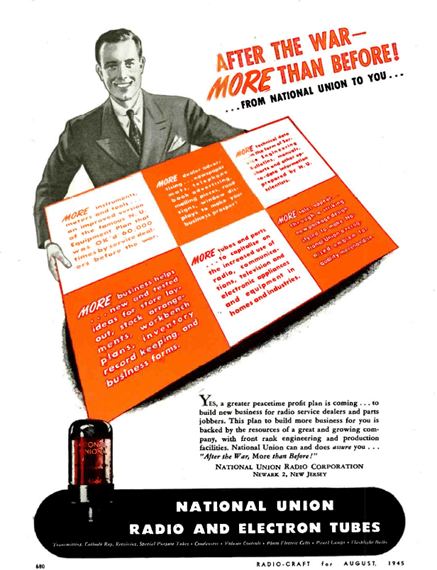
“…my youngest brother was old enough that my mother could go out and work, and she got a job at National Union Radio Tube Corporation. That was in Newark. And she worked there for ten years…They had labor problems, and the union walk-out, and all of that type of thing. It was after the War, the second World War… The factory closed down and it never reopened, and my mother stopped working. But by this time, this was about 1955, all of us were grown up then.”

Indeed, the 1950s saw the beginning of the end of the industrial revolution. A revolution that included many more human stories than most of us ever learned about in school.

Next week I’ll be highlighting some more of these interesting people and what they did with their lives once arriving from the south. Until then, let’s keep learning our history!

Painting History

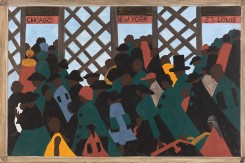
“During World War I there was a great migration north by southern African Americans.”
Panel 1: The Migration Series, Jacob Lawrence.

JACOB LAWRENCE WAS A JERSEY KID, and an artist whose work many of us are familiar with – even if we don’t know his name. Lawrence was born in Atlantic City, his parents a part of the Great Migration. But he moved to Harlem as a teenager and spent most of life there. And while his art deeply reflects the influence of that mid-20th-century Harlem neighborhood, one famous series of his stands out from this theme. Lawrence’s Migration Series is based upon stories he heard his family tell as he was growing up, and throughout his time in New York. These were stories of the Great Migration. And if you, too, are interested in stories of the Great Migration, well, then you can always order my book!

Lawrence’s painting above is the first of the 60-panel Migration Series. The series was completed in 1941, funded in part by the Works Progress Administration (WPA). It was to be viewed as one piece in his thinking, not 60 separate works of art, because it told one continuous story. Perhaps we can even think of each painting as a chapter in his unwritten book. Ultimately, two museums would split this collection – New York’s Museum of Modern Art (MoMA) and Washington DC’s Phillips Collection. At times they have collaborated to show this whole series together, and I was able to view one such exhibit, entitled “One-Way Ticket,” at MoMA in 2015. Every panel, by the way, includes a caption. Lawrence initially wrote these captions in the 1940s, but as language and culture (somewhat) evolved he made modifications to most all of them in 1993, prior to an upcoming exhibit of his work. Most commonly, the word “negro” was changed to “Black” or “African American.”

The commencement date of the Great Migration differs depending upon whom you ask. Many, like Lawrence, place its origins around the beginning of WWI, some calling that the First Great Migration. (The “second” would come around the time of WWII). But African Americans were certainly leaving the South for places North, East, and West way before then. For example, in Newark, New Jersey, the African-American Bethany Baptist Church was already being established in 1870, when a group met together in Deacon Jackson Watson’s home at 187 Commerce Street. The church became officially sanctioned in 1871. The need for Black churches was growing as migrants moved from the South. And Bethany Baptist continues to be central to many African-American religious lives today, even as some have moved far outside the city limits within which they first lived.

The Great Migration, as with so many migration streams, can be characterized by both pushes and pulls. Pushing Black Americans out of the South at this time was the continued and escalating violence directed at Black southerners; many whites resented the “freedoms” that they were enjoying for the first time. As well, for African Americans in the rural south – and remember, not everyone who left the south came from a farm! – agricultural disasters quite often precipitated the departure. And finally, there was the hope for a life less fettered by racism. A hope that some felt was dashed, while others discovered was well worth the trip. As former mayor Sharpe James said towards the end of his Krueger-Scott interview:

Newark has given me everything, and the only thing I want to do is give something back to the city that took this poor boy who was a transient from the south, gave him hope, gave him love, kept him alive, gave him an education.

The period around WWI saw a lot happening in this country, and participants of the Great Migration were key to many of these events, directly and indirectly. For example, George Baker, known as Father Divine and the self-proclaimed God incarnate, was from the South — North Carolina or Maryland, depending upon what records one reviews. Divine started the multiracial International Peace Mission Movement sometime around 1915 in the Brooklyn, New York area, and ended up becoming one of the most revered and followed religious leaders of the time period. So much so that many would even call his organization a cult. There is plenty of discussion about Divine by the narrators in my book — from the live radio shows he recorded, to the lavish, yet extremely cheap, meals he would host at the Riviera Hotel.

In April 1935, the Newark Evening News described a banquet attended by Father Divine where there were “baskets of fruit and candy everywhere. More than 500 men, women and children were seated at the table and at least that many stood around the perimeter. From the audience a woman shouted, ‘Oh father, our Saviour, I love you.’ Father Divine sat in a satin-backed chair at the head of the banquet table. Every course passed through his hands.”

For Father Divine, leaving the South meant reinventing himself. He chose to leave his past behind so intentionally that very little is known of his family or birthplace. Although he died in 1965, Divine’s followers still participate in some of the Mission’s proscribed rituals today, carrying on his traditions and ideology throughout this country. Recent pieces in mainstream papers and journals can attest to this fact.

In terms of work at this time, studies show that prior to 1917 approximately 75% of African Americans in the country were “gainfully employed, mostly in domestic and ‘personal service’ jobs.” The war provided many of them a chance to leave these sorts of jobs, to work in factories and shipyards and earn more money than ever before. (Yet not typically equal to what the white laborers were making). But as would happen again post-World War II, after World War I when the white soldiers returned home to work, suddenly the recently hired Black laborers (and women, for that matter) were deemed no longer competent or capable to remain in those positions. “Last hired, first fired” would be the employment model for many a decade to come.

So there will be more on labor shortages, the influx of Black workers, and the changing landscape of U.S. cities in the early 20th century in next week’s blog. Until then, let’s keep learning our history!

Alien Soil: Leaving the South

I HAVE A NEW BOOK as some of you know, out from Rutgers University Press: Alien Soil: Oral Histories of Great Migration Newark. Last year I spent some time writing about the subject matter of my book through the images of the painter. Jacob Lawrence’s, Great Migration series. So many readers enjoyed the art — whether as a reminder of how much they loved his work, or as introduction to a brand new artist. And I learned, through discussion around my book, that many people are just plain unfamiliar with the historical era and/or term, Great Migration. So, through images and words, I’d like to share stories of this pivotal time in American history. The dialogue included here comes from the oral histories contained within Alien Soil. And if you want to read more, well, then you can always order my book!

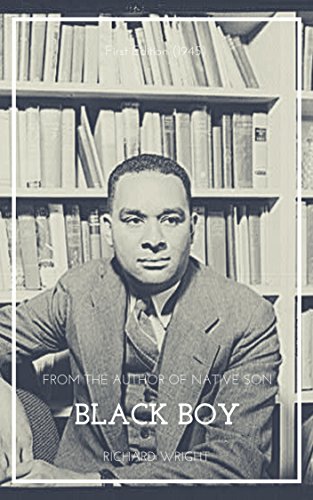
Today I want to start with some prose you might be familiar with; it is the inspiration for my book title. Have you read Black Boy yet?

Yet, deep down, I knew that I could never really leave the South, for my feelings had already been formed by the South, for there had been slowly instilled into my personality and consciousness, black though I was, the culture of the South. So, in leaving, I was taking a part of the South to transplant in alien soil, to see if it could grow differently, if it could drink of new and cool rains, bend in strange winds, respond to the warmth of other suns, and, perhaps, to bloom . . .

Richard Wright. Black Boy [1945 edition]

You might recognize the tail end of this quote, “…the warmth of other suns…” as the title of Isabel Wilkerson’s wonderful book on the Great Migration. And while the narrators of the Krueger-Scott African-American Oral History Project — the stars of my book — found warmth at times under the Newark, New Jersey sun, they also experienced quite often that they were living on alien soil. It didn’t look the same, feel the same, or even smell the same. And sometimes that was a good thing, but even good things can feel strange at first.

“The culture of the South,” as Wright puts it, takes shape in numerous ways for the participants of the Great Migration. In the discussions between narrator and interviewer in the oral history collection (who were always familiar with each other, which is unusual for an oral history project) we hear about the foods of childhood, chores performed that had no place in the concrete neighborhoods of Newark, and traditions clung to even while assimilating to Northern ways.

I always remember how you stop trains in the South at the location, build a fire by the railroad. The train stopped. We got on it…”

– Sharpe James, former Newark mayor

Folks sure didn’t have to do that in Newark — or in other major cities that so many Southern Blacks migrated to. After all, Newark’s Penn Station provided an organized system of trains, schedules, and ticket booths instead. Now, there are stories that some migrants, intending on living in New York City, errantly disembarked in Newark. Why? Because when the conductor, with his East Coast accent announced, “Newark, Penn Station,” it sounded very much like, “New York, Penn Station” to some. I have yet to find a person to attest to this through personal experience, but it makes for a good story, anyway. And isn’t that what history is, a chain of human stories fit together like puzzle pieces in order to create a bigger picture.

In her oral history interview, Senator Wynona Lipman, the first African-American woman elected to the New Jersey Senate, and the longest-serving member of the State Senate, was asked by Mrs. Glen Marie Brickus if she knew anybody who used snuff or chewing tobacco. Oral histories are so wonderful in the way that one question can often lead to an unlikely response. The great minds of the late historians Giles Wright and Dr. Clem Price created a questionnaire based on this understanding.

Lipman: Oh, the snuff, yes. Snuff, the lady who helped us do the washing, at the wash pot outside, you know, where you boiled your clothes for washing over a fire. Oh, she was a snuff dipper I tell you. And my father chewed tobacco. Yes.

Brickus: Oh yeah. Yeah, we had one of those wash pots in the backyard. And somebody had to go and build a fire on the wash day.

Lipman: I remember killing pigs, too. And making crackling.

Brickus: Oh really? Yeah, we did too, we did too.

Lipman: We had chickens, and all of that.

Brickus: We did too. We raised chickens and guineas and there was, you know, you’d wait for special kinds of days as far as the weather to kill hogs. And then you may kill three or four or more at a time. And I can remember seeing them strung up. You know, they’d put up these special poles, with the poles across the top and hang them up there.

Lipman: We had a smoke house.

Brickus: We did too. They would first salt the meat down for so long, and then take it out and hang it up and smoke it. Keep the fire going day and night to smoke the meat. And it would never spoil.

Lipman. No.

Brickus: You could keep it indefinitely and it would never spoil.

Lipman: It was wonderful. We had a cow until the town made us get rid of it. Senator Lipman concluded this conversation with an assertion that farming was a hard life, and Brickus ended this section of the interview saying, “Oh, we have more in common than we knew about.”

Talk about an opportunity to “see” the South in a way so many of us non-Southerners will ever get to. Now, granted this is the rural South, which is not what all of the land below the Mason-Dixon line looks like now – nor did then. Certainly, African Americans from the southern cities also left their homes for better jobs and somewhat less racism (although it often tended just to be more different than less). But because of a confluence of agricultural issues, especially around the early 1900s, those living off the land often had to leave that land behind. There will be more on this later.

Alright, thanks for reading the first installment of my own Great Migration series. Not as artfully done as Jacob Lawrence, but perhaps with the same intention: to ensure that the story of the people who left their homes for “a better life,” and in turn transformed our country for the better, get told. Tune in next time for a look at WWI and the Great Migration. Until then, keep learning our history!

Easter Love?

HALLELUJAH HE IS RISEN. That’s what they say in my tradition. In my church. When I had a church. Before I was disappointed in a stance, and then deceived by a board. Two churches in three years. Some say, maybe church is not for you. I wonder this myself, what with my some-would-call radical views. Where could someone like me possibly fit in?

I felt alone today, waking up without a church to go to, getting all dressed up, admiring the sisters’ hats, singing the old songs – preferably the old ones anyway. Celebrating in community some kind of rebirth – because we Christians see the event in question in a number of ways. But then I started reading my bible, and looking at some commentary, and writing in my journal. And I realized, as the old saw goes, we are really never alone. “He will not leave you or forsake you” (Deuteronomy 31:6).

And then after all that, I stumbled back onto fabulous Glide Church’s online service. I drank my coffee with tears in my eyes as I worshiped from afar with this most loving and spiritual community. Now Glide is its own thing and I want to speak a little more on it down the line. Suffice it to say that at the end of the morning, as my daughter walked in holding a bouquet of purple Butterfly Pea Flowers, saying, “Happy Easter, Mom,” all was right in my little world.

I really have been looking for a safe place to worship. Safe from prejudice, safe from hypocrisy. Good luck with that some say, as they turn their back on their own church-going practice. I get it. Yet, I have hopes. (Glide has helped fuel those hopes). I want to be safe in my questioning, my wrestling. I want to know I am fully welcome — with all my views and thoughts — to worship in a church community.

N.T. Wright is a biblical scholar who I came across in my search for “progressive bible commentary.” It ain’t easy to find, my friends. While he’s not exactly radical, Wright spells things out in a way that makes room for one’s own thoughts. In his book, Broken Signposts, he focuses on the book of John. He writes that the resurrection of Jesus is “God’s yes” to the love that we humans know deep down is central to being human. It’s a kind of sharp reminder that we all better get on that love train right fast. It is our job.

And this theme of love, well it keeps coming up for me. Astrologically, politically, relationally… It’s got me thinking that love really, literally, has to go through us humans if it’s going to spread. Like, if one believes Jesus is love, and that they are supposed to spread said love, well, then there has to be an open flow. If we don’t love – ourselves and others — then that power stops at us. We block it. And it sure looks like there’s a lot of heart blockage going on right about now: Arguments around paying for graffiti removal from an empty office building in downtown Los Angeles, instead of efforts to fill that empty building with unhoused human beings; little girls who are raped being forced to have the child because of Draconian abortion laws; threats that until Hamas is “defeated” thousands of Palestinians will continue to be starved and murdered… Where, as Roberta Flack once sang, is the love?

John wrote in chapter 13 of the Bible that Jesus wanted us to accept a new commandment, to love one another the way he loved everybody. And even if you see Jesus as simply a good role model, and not the son of God, you have to admit that he was pretty cool with people. Lepers, cheaters, rich people, liars… He gave them the benefit of the doubt. Seemed he really believed in the ultimate possibility of the goodness of humanity.

I’m going to keep working on opening up my flood gates, even though it hasn’t always served me in the past. Like, I got hurt. Like so many of you got hurt when you leaned in with love and got back [fill in the blank]. We close up this pipeline of love through mechanisms of fear, self-criticism, and sometimes through the religious practice of looking upon ourselves and others as sinners. This is a whole other story for another time, but I must say it seems a concept that does not benefit people all that much. We stand behind the bars of an open cell explaining how we can’t do this and that because of ours or others’ crimes. We have been taught, in a myriad of classrooms, that we don’t deserve to fly and soar and wish and scream. But we do, in the name of humanity, in the name of love. (Thanks U2).

Glide Church, located in San Francisco’s Tenderloin district is doing the thing I want to be a part of. Their mission statement begins:

Glide Memorial Church believes and practices a Christianity where all people and all beliefs are welcomed. Grounded in imperatives of liberation; unconditional love; self, systemic and world transformation Glide Memorial Church nurtures the spiritual needs of our congregation and community…

I attended Glide one Sunday when I was in the Bay. And I felt at home in a sea of everybody – old, young, white, Black, brown, Asian, indigenous, straight, gay, trans, dressed up people and people wearing the same thing they’ve been wearing for the last month… I urge you to consider watching a service of theirs online and you’ll see what I mean. (Then consider donating to their outreach efforts). For me, ending Easter morning “at” Glide was perfect. I walked away reminded that, indeed, we have received a mandate to love. As an action. And not as an or else… but simply as a because. Because we were so loved.

Happy Easter, happy Resurrection Day, happy new season of love.

You Better (Not) Think

Photo by Anete Lusina on Pexels.com

THANKS TO SKIN CANCER I FORGOT HOW TO BE IN THE MOMENT. What I mean is that I spent so much time since June 26 (who’s counting?) anticipating the other side of this debaucle that I got out of practice of the whole Being thing. I mean, I tried to be present, grateful, all that stuff. Like what I wrote about before. And for the record, someone just the other told me they had no idea what I was going through and how limited I was by it all — so I must have been soldiering on pretty well. (Which is not exactly the same as staying present, but…). What I’m saying is that I made an effort to stay in my body, but there was a lot of impetus to depart.

I’m still slowly reading Eckhart Tolle’s The Power of Now. One idea that he asks the reader to accept is that we are our bodies, but not those impermanent ones prone to disease and death. There’s an Inner Body he speaks of and I think that might be the place the Holy Spirit resides, for those of us who track with that particular idea. The point is, we’re supposed to become one with a thing that for so many people — for so many centuries — has represented more evil than good. “If the master is not present in the house,” Tolle writes, ” all kinds of shady characters will take up residence there” (124). Religion, he argues (and I think a lot of folks would agree) has interrupted up this relationship with body, focusing too often on the superficial one while leaving the spiritual one far out of the conversation. Some religious practices actually require denial of the body, like with fasting. Or corporeal self-punishment, like self-flaggelation, which is apparently still a thing in some parts.

So why did I come to the conclusion that I’m out of practice of the mindfulness that has been so central to my life for so long? I’ll tell you why, because when I finally had the time to watch my thoughts, they were hurdling down the freeway at about 100 miles an hour, even as I sat quietly overlooking Maine’s coastal harbor, the gentle sound of water lapping against the dark shimmering rocks, soft sunlight warming my shoulders (though not my face of course, because damned if I’m going to cook these scars into my visage!). So there I was, ensconced in what could very well have passed as the requisite photo accompanying the dictionary definition of “bucolic” and I was wondering what my flights home might be like:

Middle seat again? And how was I even going to get to the Portland airport? Would it really cost $125? Maybe I shouldn’t have stayed those extra nights. That was a lot of money. Would I be teaching two courses this fall to cover all these big bills that were coming because I was living it up in Maine for a week? And when was I going to grade those summer session papers? Would that one student hassle me about her grade some more? Where did she learn to gaslight? Why is that term so popular these days anyway? Were more people doing it, or is it just a vocabulalric trend? I need to get that fall syllabus written for my new job. How much will I change it? For time’s sake I should probably just keep it the way it is, but I know I’m not going to because I want to incorporate Western history in there. Why don’t we learn about the West back East? What did I learn about California in high school civics, besides about the Gold Rush? That was my 4th grade project, I wrote a fictitious journal about a gold miner, probably after reading the Encyclopedia Brittanica about gold mining.

I was also wondering:

How far have I just walked on the beach? Is that app on the phone really accurate? Why do I care about the number anyway? Because I haven’t been able to work out for almost 2 months so all movement is crucial, that’s why. I have a lot of work to do to get back in shape. Plus I’m eating like a horse. Why were all those lobster rolls so expensive — did I really need to get three of them on the trip? I promised I would eat lobster here but why really? Do I even like lobster?

And:

Are these scars really going to heal? Am I going to have a bumpy face forever? Did I walk too long in the arroyo last weekend and not put on enough sunscreen ? I have SPF 75 now. But then I think I read that anything over 30 is overkill. But it’s a Neutrogena product that I paid a lot of money for, so it should be accurate. Why do I spend money like that? I don’t usually. I was just trying to save my face. I hope the photos people took at the wedding make me look normal. The scar on my cheek is okay but the nose thing looks creepy. I hope there’s some good photos I can share on Instagram. What kind of captions will I write? Should I write about it being a gay wedding, or does that just sound like I’m trying to show how woke I am? But it was a gay wedding and that’s something to celebrate. I want to celebrate that. Even though one of those grooms hassled me too much about whether I was coming to the wedding or not…

Anyway…

Tolle says “Presence is pure consciousness — consciousness that has been reclaimed from the mind, from the world of form.” I think it’s fair to say that I was un-conscious a lot of the time these past few months, relative to my usual state of being anyway. I was out of practice. Because not only had I been limited in my physical activity, by doctor’s orders, I had apparently ordered my own mental activity to be limited as well. Limited to possibility, and dreaming, and adventure, and curiousity–and stillness, most importantly of all. I forgot how to be still, in mind and inner body. Meanwhile my outer body was just about as still as it’s ever been.

But now I am back from my vacation, and on the other side of this medical saga. Back to the gym, and back to my spiritual practices. And it’s okay that I strayed. We all do sometimes, straying off into the worldly and material. But, the good news is that if we have been practicing something pretty regularly for a while, it comes back to us quickly once we re-enter its space. Sort of like how my French starts to return whenever I land in Paris! Practice makes perfect…practice, maybe. I am back to perfecting my practice of being in the now and it feels really, really good. Why, I hardly am even thinking about how I have to upload all the reading assignments on my new college’s education platform which I am totally unfamiliar with — hardly thinking of that at all…