EDWARD MET RONALD IN A HOME DEPOT parking lot in Burbank, standing with a group of men waiting for day’s work. The two started talking about their home countries, about cooking, about soccer…and they hit it off. Edward was still doing construction a year later, after landing a union job that kept him busy building residences he would never be able to afford to live in. The job paid well, and his papers were very close to being in order. As soon as they were finalized he would bring his family over to live with him. This plan kept him working, even when he did not especially feel like it, when what he really wanted to do was make food. So he was glad to help Ronald out.
Edward would drive over to Ronald’s house a few nights a week. They would do some cooking, any kind of food prep that could be done ahead of time, and then sit in the living room watching soccer matches, especially if Guatemala or Mexico was playing. Ronald was renting a small bungalow on the east side. He got lucky, finding a fellow-Mexican who actually owned a home and had a place in the back. As long as the rent was paid, no questions were asked. Ronald did not even confide in his landlord, a man who certainly seemed chido. You just never knew.
It was nice for Edward to have a friend in California, a man who was also trying to do the right thing, stay quiet, head down. Edward had a lot of practice doing that back home. But even that was not enough to stay safe there. He hoped his good behavior would count for more in America. He was doing well at work; the boss liked him, the other guys – the regular core group – they all got along with each other. It seemed like most of them had similar situations. There wasn’t much talk of family, home, or the past in general. Once in a while one of the men would mention a mother, a sister, a girlfriend. But it was brief, and often seemed like a slip of the tongue more than anything.
Edward was living in a world of men at the moment and that was alright. He wasn’t interested in complicating things by getting involved with a woman. In time he would, but he came to learn that things took a lot of time in America. It may have been a land of opportunity, but there were no shortcuts in this country,not for people like him anyway. At some point he did hope he would meet a woman and get married. It was too late for him to have children. But that was okay. He felt he didn’t have that much to give them anyway. Let his friend Ronald have some kids for the both of them – he was really going places.
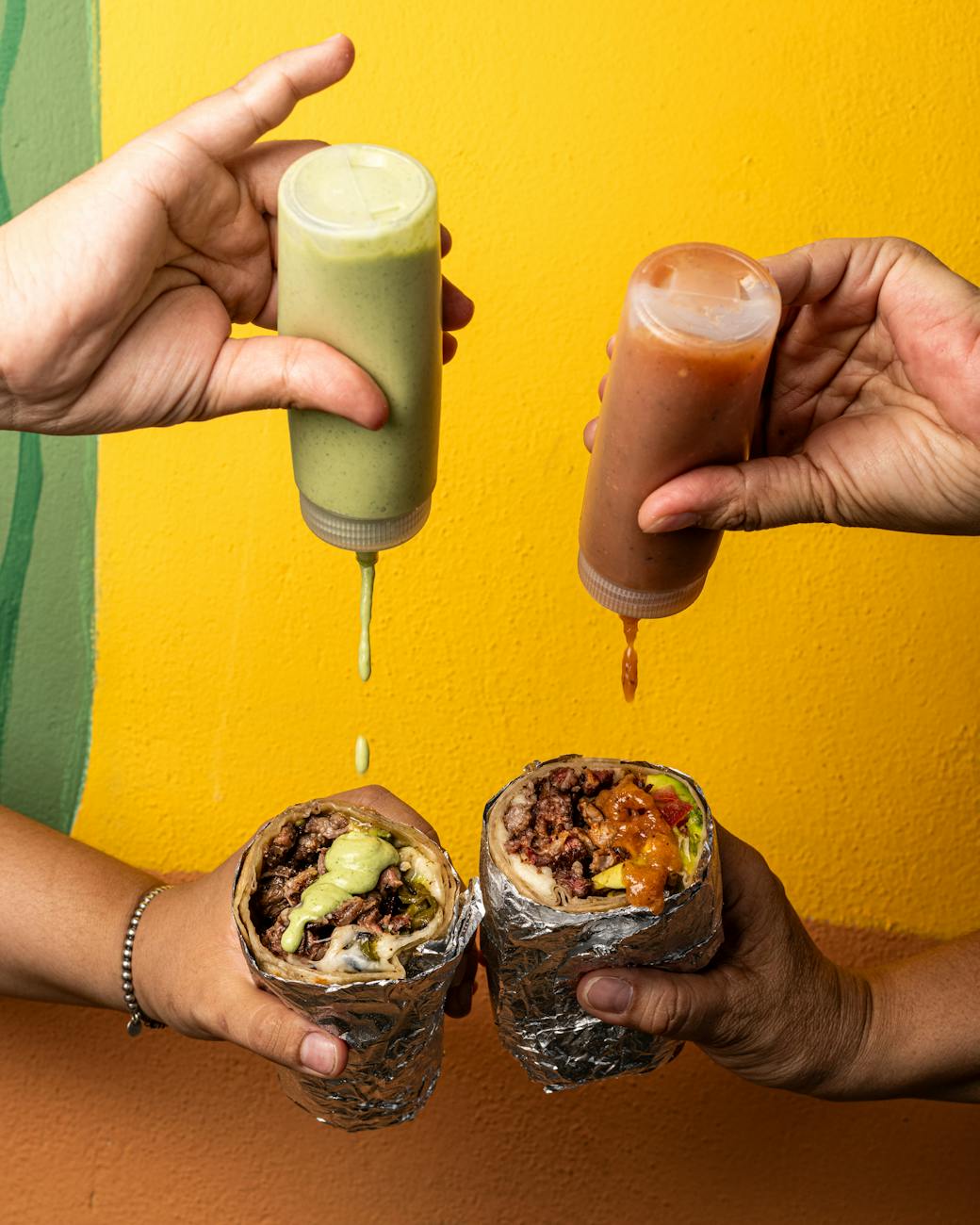
The first time Antoinette showed up at the food truck, Ronald was surprised. He probably looked surprised, too, because he had never had a woman step up to that window. At most, one would walk down the sidewalk past the men in the red chairs – often get whistled at, called out or something. Ronald didn’t think that was nice but he was not about to make a fuss with the men. Antoinette – that was the name she gave so he could call it out when her food was ready — ordered two cheese enchiladas with green salsa and a side of guacamole. Ronald found himself wondering if she was sharing that with someone before he could even catch himself. He smiled too big as he handed her the food, “I threw some chips in just in case,” he said. Just in case of what, he thought to himself. How stupid. In case there’s an earthquake, or she gets lost and has to survive for days on her order from the Mexican food truck? Ronald had not spoken to a woman for so long he had apparently forgotten how to.
Antoinette thanked him generically, grabbing the white paper sacks off the window ledge. Turning around she practically ran into one of the customers who had moved his chair way up, far from the concrete wall. “Can you please move your chair back, sir,” Ronald asked with the quietest and kindest of voices he could muster. That man should have known better, there was a lady there. No manners. The man moved his chair back, not registering what had just happened. Antoinette seemed unfazed, walking away in her modest navy-blue suit that looked just a little too big for her frame. Nobody whistled.
Toni, as some people called her, was fifty-seven, but was often mistaken for forty-something. This could be a benefit, but also a detriment. Not like a woman in her forties is a kid, but her department chair and other college administrators seemed to speak to her like one. She had been in the business of academia for decades, had three grown children and two divorces. She had been around the proverbial block and yet was forced to suffer colleagues who knew nothing but graduate school, compatible partners, and aspirations of academic administration.
That day, back on campus with her lunch, she sought out the most isolated table at the outside seating area. She was looking forward to digging into her enchiladas and guacamole in silence. Only students hung out in that area and they would have no interest in speaking to some professor hunched over her meal. One upside of the pandemic was less interruption in daily life; social skills had gone out the window and half the people were scared of their own shadow.
The enchiladas were good. Definitely more than one kind of queso in those things. She had been eyeing the food truck for months, but Toni typically brought her own lunch to work. This was partly because she was frugal – necessarily so – and partly because it meant less social contact during her brief break between classes. But the power at her apartment had gone out the day before and she had no time to vet the refrigerator for what food was still good and what needed to be tossed. So no lunch from home, and an excuse to head over to the red and green truck. Thankfully the guy in the truck wasn’t especially talkative either, so Toni didn’t have to expend that extra energy. She taught four undergraduate classes a week – two history and two writing. She did a lot of communicating, navigating, explaining, and bargaining. So all communications had to stop when she stepped out of the classroom.
Twenty years ago, when she had started teaching, there had been less bargaining with students. And it wasn’t just during the pandemic that things changed. Somehow, in the last few years, students had come to believe that advocating for themselves meant that they should not accept any circumstance they didn’t like — no matter that they may well have earned them. Just that morning Toni’s office hours had consisted of a number of bargaining sessions, plus a student coming in to ask about the final essay, expressing that she didn’t really understand the assignment. While one might suggest a positive spin, that said student had enough motivation to come speak to their professor, Toni couldn’t help wondering to herself, what is there not to understand!? Not only were the guidelines explicitly laid out, each step enumerated for the whole brainstorming/proposal/rough draft/final draft essay process, but each day in class they went over one step together. But many of these students wanted a shortcut to reading directions, to thinking things through on their own.
Now it could be that this particular student who visited her office that day, Shawna, was confused because she came in excessively late most every day, sat at the back of the room, and texted during the majority of class. Toni used to stay on top of the texting, laptop surfing, etc. But she didn’t have it in her anymore. And maybe that was better pedagogy anyway, she wasn’t sure. She just knew she couldn’t expend her limited resources on repeating the syllabus statement which equated texting to interrupting someone in class. Whatever Shawna, go ahead and text, she found herself thinking when she would look up to see the student smiling into her phone.
 Katie Singer