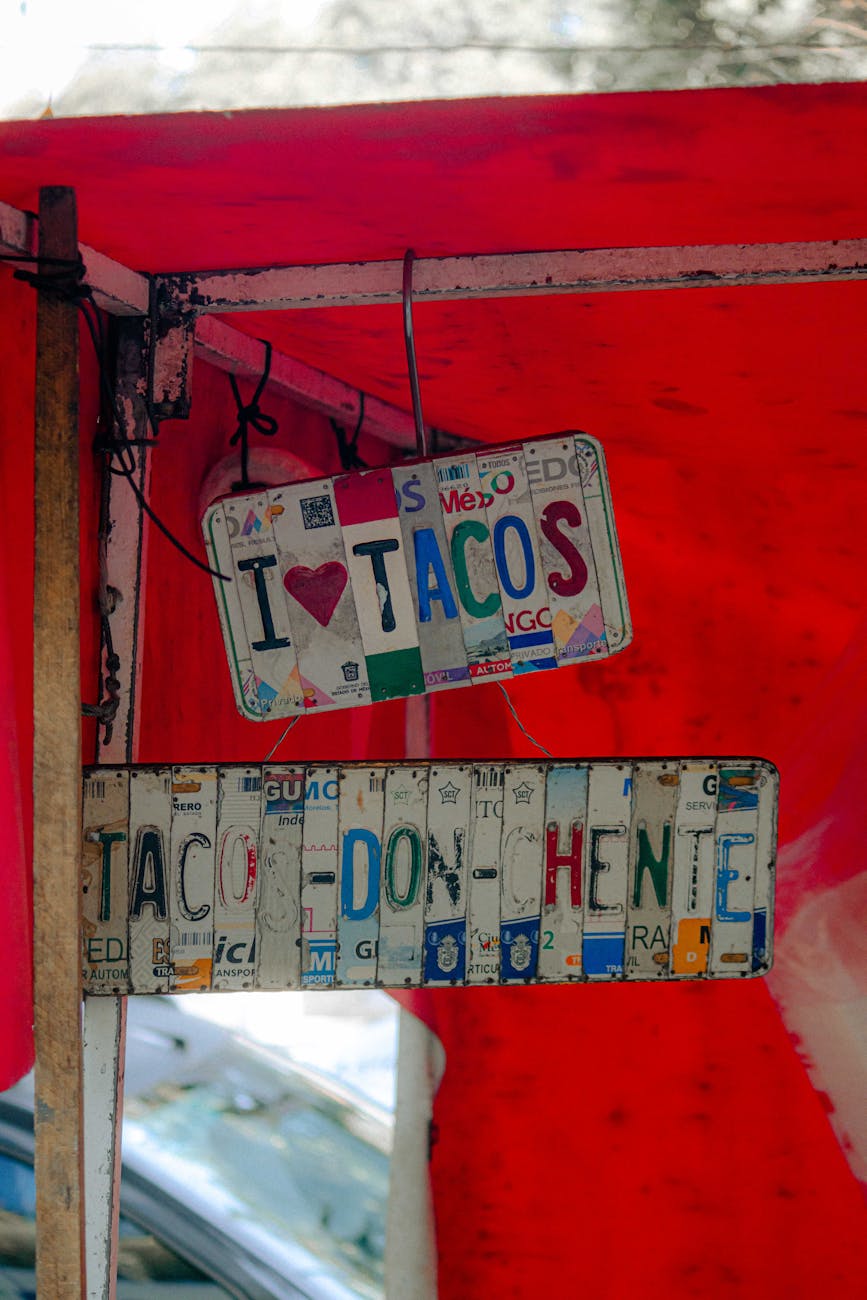
EVERY DAY AT 8:30 AM RONALD PULLS HIS FOOD TRUCK UP to the sixth parking meter down from the corner of Verdad Street and Palm Boulevard in Los Angeles. Verdad is a wide street, its lanes feeding into all sorts of directions. Heading north, cars can veer off to the community college or the park; southbound, they’ll be heading downtown – choosing once again when to peel off onto a surface street, always looking for a short cut in a city that has none.
The police have never threatened Ronald with an overtime parking ticket, probably because they are some of his most regular customers. All the same, Ronald gets quarters from the laundromat each Sunday and fills the parking meter from 8:30 am to 2:30 pm every day he is there, Monday through Saturday. Thursday mornings he waits until 9 o’clock to pull in, honoring the street sweeping rules.
Ronald wants no trouble with law enforcement. He is mindful that a new officer could come along at any time, not knowing about the apparently unwritten agreement he has with the police. So he goes by the book. Ronald intends to remain off the radar, as they say, of any and all government officials. He makes no waves. This was a phrase, once he discovered it, that he loved to say, imagining a whole ocean without a single wave or movement in it. Make no waves.
Ronald’s truck is green on the sides, with a red and yellow front that’s made to evoke flames. An American flag features prominently right above the windshield. Painted on each side of the truck are images of some of the dishes you can order. Platanos and rice; beef burritos with black beans; cheese enchiladas…
Once parked, Ronald’s morning ritual begins with him wedging a piece of wood behind each front tire. Tire chocks are not required for food trucks, but again, Ronald thinks it best to be safe; so many people being called out for so many things these days. It was all over the internet. Ronald watched a video just the night before, made by a nearby suburb’s city hall; it was all about how to report an illegal street vendor. “Illegals,” the spokesman called them. He was a member of the city council, with a Latino last name. There was a link to the “response form” right there in the video. And once the form was completed, law enforcement would go investigate the suspected “illegal.” But how would a regular person even know if a man selling bags of oranges on the median, for example, had a license. They might just report the vendor anyway — if they were that kind of person. Which there seemed to be a lot of these days. But that was not going to happen to him. Everything up to — and past — code was the way Ronald worked.
After getting the truck secured, Ronald would sweep the sidewalk in front of the truck. It looks nice to have a clean sidewalk. Makes people want to eat. He then brings out the metal garbage can, hosed down the night before in his driveway. He fits a fresh, sturdy black garbage bag neatly around the edges of the can. It is important to make sure that no garbage ever makes its way onto the sidewalk, or that the bag breaks, anything like that. He buys the industrial strength bags, from ULINE. He learned early on you can’t take shortcuts with certain things. It will always cost you way more in the end.
Next Ronald sets out the red plastic Adirondack-style chairs. They have become his signature. Four of them. Lined up along the sidewalk, pushed back right against the concrete wall that abuts the steep hill of dry grasses behind it. Everyone knows it doesn’t rain much in Southern California, but even when it’s in the forecast, Ronald sets out the red chairs. It was like taking an umbrella when there was supposed to be rain; chances are it wouldn’t rain.
Ronald had to remind his customers from time to time to move back off the sidewalk, as they inched forward, or formed circles with the chairs during peak business time. “In California, it is illegal to intentionally block the free movement of another person on a street, sidewalk or other public place,” he would recite to the construction workers and hospital employees in a friendly manner, shrugging his shoulders in a what-can-you-do kind of gesture. He didn’t tell the police to move back, of course.
After the outside is all set up, Ronald works on the food. He places the meat to warm on the lowest flame; heats up the grill for the tortillas; slices up the jalapenos and plantains; dices some tomatoes and onions. He saves the avocados for last, making a quick guacamole, squirting lime juice in immediately to keep the bright green color. He smiles sometimes, cutting up those avocados from Mexico, the ones in the little mesh green bags. Not that he ever saw them like that back home. But still, he liked using Mexican products when he could. Made him feel proud for a moment.
Next he sets up the shelf that sits under the service window with forks and napkins and all the condiments. He has salt, pepper, Tajin, and cut up limes available. The limes are a little expensive, but people love to squeeze them on their food. A little freshness for a fast-food meal consumed in a concrete setting. Lastly, he flicks on the LED sign that boasts “tacos, burritos, enchiladas…” on loop. Every day the same routine, and he likes it like that. Stay in your lane, they say.
Around 11am the cars start pulling up along Verdad. Small pick-up trucks fitted with racks in the back filled with landscaping tools; Range Rovers driven by the local small business owners; the dark blue Mercedes C-Class of the dry cleaner down the block. Ronald always wonders why that man would drive the short distance from his store when it would probably be easier just to walk. He could see the cleaners’ neon blinking sign from his truck. But he asked no questions.
The first men to arrive, always men, would take the red chairs after they ordered. He would chat with them a bit — about the weather, the Dodgers… They would get their food and go huddle together in the chairs, talking in mixtures of English, Spanish, and other dialects and languages Ronald didn’t recognize. Almost all of them immigrants from one place or another. The overflow would stand around the truck or take the risk of sitting on the curb as speeding cars nearly amputated their feet, only noticing last-minute that the truck wasn’t moving, quickly veering left into the flow of traffic.
Ever since the presidential election there was a combination of fear and enthusiasm around the subject of immigration. The immigrants, of course, were the ones with the fear. Unless they had voted for that man, believing somehow that they would be exempt from the threatened mass deportations. Because they were different somehow from the other immigrants, they believed. Even their relatives, who were not yet citizens, would be treated differently because they didn’t “look” like immigrants. Or maybe they’d be safe because everyone knew how crucial their work was to businesses in the area. But Ronald didn’t know those kinds of immigrants; he only knew the ones who were scared.
At this same time, the city council had voted unanimously to become a sanctuary city. It was an official ordinance. Ronald read in the local newspaper that the ordinance would “prohibit any City resources, including property or personnel, from being utilized for any immigration enforcement.” Then again, the man who had just been elected sheriff was the chief of police a while back. And he had been known to work closely with ICE, the U.S. Immigration and Customs Enforcement. So it seemed like one step forward and then another back. And a really good reason to continue his approach of making no waves, and staying in his lane.
Tuesdays were always busy for some reason. He had not figured out why. But Ronald always made sure to have an extra pound or two of carnitas in the cooler on Tuesdays. He prepared the meat twice a week, on Sundays and Wednesdays. And if he ran out, then he ran out. That made him feel good actually, it meant people really liked his food.
His friend, Edward, was responsible in large part for how good the food was. He had been a chef in Guatemala, working in one of the nicer tourist restaurants around Lake Atitlán. But the gangs were still there, even if they didn’t bother the tourists much. Edward’s boss, who owned the café where he worked, was part of a non-profit group trying to support the indigenous people there. One gang in particular felt that this man’s mission was getting in the way of their “work,” so he became a target. And when he did, so did all the people who worked for him, including Edward. That was the last straw for Edward. It had been so hard to get out of his village and into the “safe” city and then to find a job, practice his culinary skills somewhere they would be appreciated – and compensated. So Edward left Guatemala, without even telling his parents or his sister. He didn’t want them to know anything that they might be asked to reveal later. It hurt him so much to leave like that.
 Katie Singer