BOOKCLUB MAVENS! (A gender-neutral term, I’ll have you know). This week I am here to suggest that my book would be superperfect for your next gathering. I’ve done some major research in my day when it comes to book clubs, let me tell you. And it occurs to me that mynew book, Alien Soil: Oral Histories of Great Migration Newark would make for a great book club book.
After some thorough Googling (!) I have found that there are certain factors involved that make for an excellent book club book. I will now share a few of those factors and provide support as to why my book satisfies these requirements. (Can you tell I’m in the midst of teaching composition right now)?!
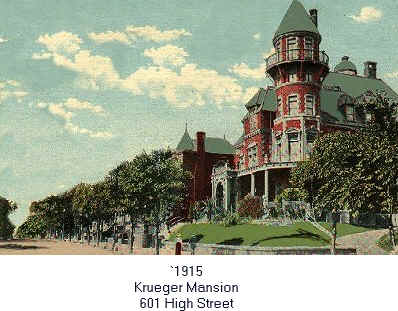
Okay, for one thing the book apparently needs to have enough substance for robust discussion. I can assure you that my book is substantive and prime for discussion. You can talk church, baseball, music, politics, labor issues, art, fire, race, cities, historic preservation and rebellions. Something for everybody! For example, take these excerpts from Chapter One which details the story of why the esteemed Krueger-Scott Mansion couldn’t ever quite get turned into the Black Cultural Center so many wanted it to be.
The Mansion was the proverbial elephant described very differently by each individual in a group of blind men. The edifice symbolized an outdated Newark for some, a point away from which the city needed to move. Others saw the house as a reflection of the long history of the people who came to Newark and who were in large part responsible for what it had become – a modern city of culture, trade, and learning. The Mansion’s beauty – and value – were in the eye of the beholder. Lou Danzig, Newark Housing Authority (NHA) Director, declared it a “monstrosity” in 1966 at one particularly contentious public hearing. At the same meeting J. Stewart Johnson, curator for the Newark Museum and president of the Victorian Society of America, argued for the protection of the Mansion, out of respect for the city’s early history. “…We are destroying the 19th century here as fast as we possibly can,” he warned.
In 1979 the Krueger-Scott Mansion was still in fair condition, although it had suffered a fire on the third floor which “damaged the structure’s heating system” and “destroyed the dome’s crystal skylight.” The following year the City of Newark made its first investment in the Mansion’s preservation, approving a $50,000 grant for “emergency repairs.” The Mansion had finally made its way into the conversation that was already surrounding several local historic preservation efforts. “Mrs. Scott is to be admired for holding onto the mansion for so long…” said Margaret Mandhart of the Newark Preservation and Landmarks Committee in 1981. The hope was that Scott’s hard work would not be in vain.
Louise Scott in her mansion
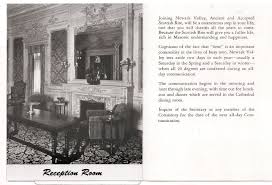
The physical realities of what it would take to reconstruct and repair the Mansion were becoming ever clearer, although of course not everyone agreed just what those realities were. A July 1991 report by Glenn Boornazian Architectural Conservators stated that removing the stucco surface (that was probably applied by the Scottish Rite Masons) in a non-destructive manner from the brick was “unfeasible if not impossible.” (Handwritten next to that section on the document is the word, “shit,” circled and with an exclamation mark).
Scottish Rite Freemasons brochue
Catherine Lenix-Hooker [executive director of the project] has asserted that the Krueger-Scott African-American Cultural Center project was not a failure, that they “went the distance” with what they had. A dwindling tax base, concerns over struggling schools, and corruption in government are just some of the reasons she gave for the inability to finish what was started. Mayor [Sharpe]James has insisted that cost came in as the number one issue surrounding the Mansion project, followed closely by just who would control what once it was finally completed. “Cost and control ruled the day!!!” exclaimed James. The simple conclusion is that economics vanquished this historic preservation effort. When asked, both Lenix-Hooker and James were adamant that race played no part in the Mansion’s demise. But as late historian Clement A. Price said many times, including in his documentary, The Once and Future Newark, “Race matters in America. Race matters in Newark.” Race matters in the story of the Krueger-Scott project.
The Mansion, circa 2011 Photo by Samantha Boardman
How’s that for a soap opera starring a mansion?! The good news is that the property has finally been restored, but alas, not as a Black Cultural Center.
Second on the book-club-factor-list is that the book has to be widely available. Well, I think we all know by now how widely available this puppy is. (See its link in the first paragraph). Of course, I prefer you order it through the publisher – as opposed to that other place that starts with an A. (See just the latest in a list of labor exploitations this company perpetrates upon its workers). But do you. The book can also be purchased from me, if you live nearby OR if you attend one of my upcoming events. You could even get it personalized that way!
Another suggestion is that book club books not be too long. Well, mine is a tidy 170 pages – with pictures, too! Plus, don’t be freaked out that it’s from an academic press. If you’re reading this now then know I write in pretty plain English — no jargon here. In fact I was literally told in grad school that I didn’t write like a historian and, well, that felt like a good thing. Who wants to write like a something? I’m a storyteller and everyone loves stories!
And get this, I would come to your meeting (as long as wine and cheese are available, of course). I’ll even Zoom in if you’re far away from me — and then have my own wine and cheese. Plus I can provide some discussion questions for you all if you’d like. It’d be fun! I’ve been in book clubs where the author comes and it just changes everything. Of course you probably won’t want to be too snarky when they’re there, so easy on the Chardonnay if that’s something that happens to you. (Talking to myself here)!
So yeah, read my book; review it on Goodreads (and other sites); then suggest it to your book club. Let’s keep learning our history – but not be bored in the process. Thanks!




 Katie Singer